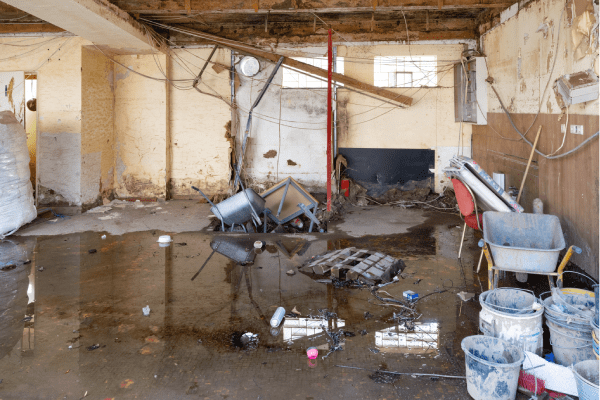
After a pipe bursts, repairing the plumbing stops the leak. It does not remove the water already inside your floors, walls, ceilings, or belongings.
Recovering from that damage often involves two connected stages: water mitigation and restoration. Mitigation focuses on limiting further damage through water removal, assessment, and drying. Restoration includes the repairs needed to return the affected areas to usable condition.
Understanding the difference helps explain why a project may continue after the standing water is gone, what the drying equipment is doing, and when rebuilding can begin.
What Is Water Mitigation?
Water mitigation is the work performed to stabilize a property and reduce additional damage after a water loss.
Following a burst pipe, this may include extracting water, locating hidden moisture, moving belongings, removing materials that cannot be restored, and drying the building.
The exact scope depends on where the water traveled and what it affected. A pipe that bursts above a finished ceiling can require a different response from an exposed basement pipe leaking onto concrete.
Mitigation aims to address the conditions that could cause damage to continue while preparing the property for any necessary repairs.
What Is Water Damage Restoration?
The term restoration is sometimes used to describe the entire recovery process, including mitigation. When contractors discuss the project in stages, restoration or reconstruction often refers to the repairs that follow cleanup and drying.
That work may include:
- Replacing damaged drywall and insulation
- Repairing ceilings and wall finishes
- Replacing or repairing flooring
- Restoring baseboards, trim, and doors
- Repairing cabinetry and other built-in materials
- Priming and painting affected areas
Some water losses require little reconstruction. Others involve extensive repairs because water reached multiple rooms or damaged materials that could not remain.
How Are Mitigation and Restoration Different?
The simplest distinction is the purpose of the work.
| Stage | Main purpose | Examples |
|---|---|---|
| Water mitigation | Limit further damage and stabilize affected areas | Water extraction, moisture assessment, material removal, structural drying |
| Restoration and reconstruction | Repair damage and return affected areas to usable condition | Drywall replacement, flooring repairs, trim installation, painting |
The stages overlap in places. Removing wet drywall, for example, may be necessary during mitigation to reach trapped moisture. Installing replacement drywall usually belongs to the reconstruction stage.
Your contractor should explain what is included in each part of the scope so you know what happens next.
Where Does Plumbing Repair Fit In?
Plumbing repair addresses the failed pipe or connection. It is related to the restoration project but serves a separate purpose.
A qualified plumber may need to locate the break, repair the damaged section, and determine when the water supply can be safely restored. Meanwhile, the mitigation team assesses and addresses water that has already escaped.
These services may need to be coordinated. Waiting until every plumbing repair is complete before addressing standing water can allow damage to spread unnecessarily.
Tell each company what work is already underway and whether the leak has been isolated.
Jigsaw PMR provides burst and frozen pipe damage cleanup to address the property damage left behind after a pipe failure.
What Happens During Mitigation After a Burst Pipe?
The process should follow the actual conditions inside the property. Not every room needs the same treatment, and not every wet material needs replacement.
Assessment of the Affected Areas
The team identifies where water traveled and which materials have been affected.
Visible puddles may represent only part of the damage. Water can spread beneath flooring, through ceiling assemblies, into cabinets, and along concealed spaces.
Moisture measurements help guide the drying plan and establish which areas need further investigation.
Water Extraction
Standing water and accessible absorbed water are removed with equipment suited to the affected surfaces.
Extraction reduces the amount of water that would otherwise need to evaporate during drying. However, removing puddles does not establish that the structure is dry.
Protection of Belongings
Furniture and other contents may need to be moved, elevated, or relocated so the affected areas can be accessed.
Some belongings may be suitable for cleaning and drying. Others require specialty assessment or replacement, depending on their condition and exposure.
Removal of Materials That Cannot Remain
Materials may need removal because they are damaged, contaminated, or preventing access to trapped moisture.
The team should explain why removal is recommended. A wet wall does not automatically require complete demolition, but leaving unsuitable materials in place can interfere with recovery.
Structural Drying
Air movers, dehumidifiers, and other drying methods are selected according to the materials and conditions.
Equipment placement is part of the drying plan. It may need adjustment as moisture conditions change.
Monitoring and Verification
The team checks drying progress and evaluates whether retained materials have reached appropriate drying goals.
A room that feels comfortable or looks dry may still contain moisture beneath finishes or inside building assemblies.
Why Does Equipment Stay After the Water Is Gone?
Visible water is usually easier to remove than moisture absorbed into building materials.
Drywall, wood, subflooring, and other materials can retain water after the floor appears dry. Drying equipment helps remove that remaining moisture.
Turning equipment off or moving it without discussing the change can interrupt the planned drying process. If noise, heat, access, or electrical use is causing a problem, contact the restoration team so it can review the setup.
The decision to remove equipment should follow moisture conditions rather than appearance alone.
When Can Rebuilding Begin?
Reconstruction should begin when the affected areas are ready for repair.
Depending on the project, that means confirming that:
- The failed plumbing has been addressed
- Materials requiring removal have been taken out
- Necessary cleaning is complete
- Retained materials have reached appropriate drying goals
- Concealed damage has been assessed
- Required trade work and inspections have been coordinated
Installing drywall or flooring too early can enclose moisture and make further work necessary.
A contractor should explain what remains before the project can move from drying to repairs.
Does Every Burst Pipe Require New Drywall and Flooring?
No. The repair scope depends on the materials, water conditions, and extent of damage.
Some sound materials affected by a promptly addressed clean-water leak may be dried and retained. Other materials may swell, separate, weaken, or become unsuitable to keep.
For example, a finished basement with soaked carpet, wet insulation, and damaged drywall may require more removal than an unfinished utility room with limited exposure.
A useful assessment identifies both what needs replacement and what can reasonably be preserved.
How Long Do Mitigation and Restoration Take?
There is no single timeline that applies to every burst pipe.
Mitigation depends on how much water escaped, how far it spread, the materials affected, and how readily those materials can be dried. Access to concealed spaces can also affect the work.
Reconstruction has additional scheduling factors, such as material availability, finish selections, permits, inspections, and coordination with other trades.
Ask for separate expectations for drying and repairs. A statement that the property should be dry within several days does not necessarily mean the entire reconstruction project will be finished within that period.
Will Insurance Treat Mitigation and Repairs Separately?
Your insurer may review emergency mitigation and reconstruction as separate estimates or parts of the same claim.
Coverage depends on your policy and the circumstances of the loss. Report the incident promptly and ask what documentation is needed for emergency work and subsequent repairs.
Useful records may include photographs, moisture measurements, equipment records, itemized estimates, and invoices.
Keep copies of the documentation you receive. Ask your contractor to explain which work is underway, which repairs are proposed, and what decisions are still pending.
Necessary measures to limit further damage should be coordinated promptly with the contractor and insurer.
Questions to Ask Your Restoration Company
Before work begins, or as the scope becomes clearer, ask:
- What areas are affected beyond the visible water?
- Which materials can be dried and retained?
- Why do particular materials need removal?
- How will drying progress be measured?
- What must happen before rebuilding begins?
- Does the estimate include both mitigation and reconstruction?
- Who will coordinate plumbing, electrical work, or other trades?
- What documentation will I receive?
Clear answers help you understand the project and avoid assuming that the first stage includes every repair.
Can One Company Handle Cleanup and Reconstruction?
Some companies focus on emergency mitigation, while others also provide reconstruction.
Working with a company that offers both can simplify the handoff between drying and repairs. Still confirm the scope, schedule, and responsibility for specialized trade work.
Jigsaw PMR offers reconstruction services for damaged drywall, flooring, trim, and other affected building materials following property damage.
Burst Pipe Cleanup and Restoration in New Jersey
After a burst pipe, stopping the leak is the beginning of recovery. Water mitigation addresses the escaped water and affected materials, while restoration completes the repairs needed to put the property back together.
Jigsaw PMR provides emergency burst pipe cleanup, moisture assessment, structural drying, and reconstruction services for affected homes and businesses.
Call (201) 425-4855 or contact Jigsaw PMR to arrange an assessment and discuss the work your property needs.