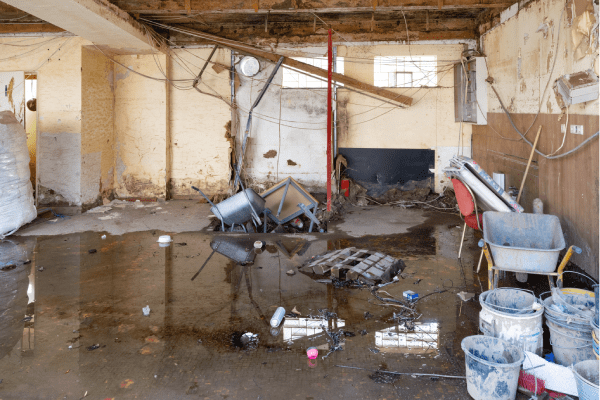
The cost of flooded basement cleanup depends on how much water entered, where it came from, what materials it affected, and how much work is needed to clean and dry the space. A small amount of water on an unfinished concrete floor requires a different response from sewage flooding in a finished basement.
The total may include water extraction, damaged-material removal, cleaning, structural drying, and repairs. Understanding those parts of the estimate helps you compare proposals and see what is included before work begins.
An accurate price requires an assessment of your basement. Square footage alone cannot show whether water has reached insulation, spread beneath flooring, or contaminated materials that need removal.
What Does Flooded Basement Cleanup Include?
Basement cleanup usually involves more than pumping out standing water. The work should address the water that remains inside building materials and any contamination left behind.
Depending on the conditions, the scope may include:
- Assessing the water source and affected areas
- Removing standing water
- Extracting water from suitable flooring materials
- Removing damaged or contaminated materials
- Cleaning affected surfaces
- Installing and monitoring drying equipment
- Checking moisture conditions before repairs
- Documenting damage and completed work
Reconstruction may be estimated separately. Ask whether the proposal covers emergency cleanup only or also includes replacing drywall, flooring, insulation, and other finishes.
Jigsaw PMR provides flood damage restoration to address water removal, drying, cleanup, and property damage.
The Water Source Affects the Cost
One of the most important factors is where the water came from and what it contacted.
Plumbing Leaks
A promptly addressed water supply leak may allow more materials to be dried and retained. However, the team still needs to evaluate how long the materials were wet and whether the water picked up contamination.
Even a clean-water leak can become an extensive project if it goes unnoticed and spreads through a finished basement.
Groundwater and Stormwater
Water entering through foundation openings, basement windows, or exterior doors may carry soil and other contaminants.
The assessment must account for both moisture and contamination. This can affect the required cleaning methods, material removal, and disposal.
Sewage Backups
Sewage cleanup requires precautions and procedures appropriate for contaminated wastewater.
Porous materials that have absorbed sewage generally need to be removed. That may increase disposal and reconstruction needs compared with a limited clean-water incident.
The water’s appearance alone does not determine how it should be handled.
Basement Size and Water Depth Matter
Larger affected areas generally require more labor and equipment, but the total basement size is only part of the picture.
An estimate should consider:
- How much of the basement is wet
- The depth and volume of standing water
- Whether water is still entering
- How accessible the affected areas are
- Whether contents must be moved
- How far water has spread into concealed spaces
A small finished room can require substantial work if water has soaked multiple layers of flooring and wall materials. A larger unfinished basement may have fewer materials requiring replacement.
Deep flooding also requires assessment of conditions around the foundation before water removal proceeds. Pumping should be planned around the actual site conditions.
Finished Basements Often Require More Work
Finished basements contain materials that can absorb water, conceal moisture, or require removal to reach the structure.
These may include:
- Carpet and padding
- Laminate or engineered flooring
- Drywall and insulation
- Cabinets and built-in shelving
- Interior doors and trim
- Raised wood subfloors
The cost depends on which materials are affected and whether they can be restored.
An unfinished basement may still need extraction, cleaning, drying, and contents handling. However, it often has fewer wall and floor finishes to remove and replace.
How Long the Water Remained Affects the Scope
A basement discovered soon after flooding may present different restoration options from one that remained wet for days.
As water spreads and materials stay damp, the project may involve additional deterioration, odors, or mold assessment. Moisture can also move into areas beyond the original puddle.
Prompt action can limit additional damage, but it does not guarantee that every material can be saved. The water source and material condition remain important.
Tell the restoration company when you discovered the flooding and when the basement was last known to be dry.
Water Extraction and Drying Are Different Costs
Water extraction removes standing water and accessible absorbed water. Structural drying addresses moisture remaining inside materials.
Both may be necessary.
A basement can look much better after extraction while still having wet framing, subflooring, or wall assemblies. Drying equipment may need to remain while the team monitors progress.
The drying portion of an estimate may reflect:
- The equipment required
- The affected materials
- The layout of the space
- The drying duration
- Monitoring visits and adjustments
Ask how equipment use is documented and how the team determines when drying is complete.
Material Removal and Disposal Can Add to the Estimate
Some materials cannot be effectively cleaned, dried, or repaired. Others need removal so the team can access concealed moisture.
The estimate may include labor to remove materials, protective measures for the work area, handling, and disposal.
Ask the contractor to explain why each material needs removal. The scope should reflect the conditions found rather than assume that everything must stay or everything must be replaced.
Additional assessment may be necessary when older building materials could require special handling before disturbance.
Repairs May Be Separate From Emergency Cleanup
An emergency mitigation estimate may not include the work needed to finish the basement afterward.
Repairs can involve replacing insulation and drywall, installing flooring, repairing cabinets, replacing trim, and painting.
Other work may require a qualified plumber, electrician, or another trade. For example, repairing a failed sump pump or broken pipe addresses the cause of the incident, while restoration addresses the resulting property damage.
Before comparing prices, confirm whether each proposal includes:
- Emergency water removal
- Cleaning and drying
- Damaged-material removal
- Contents handling
- Repairs and finish work
- Plumbing or other trade services
A lower initial estimate may cover a narrower scope.
Do Damaged Belongings Affect Cleanup Costs?
Furniture, storage boxes, appliances, and other belongings can affect access and the amount of handling required.
Some items may need to be moved so the team can extract water or reach affected walls. Others may require cleaning, specialty assessment, storage, or disposal.
Photograph damaged belongings when it is safe and identify items with significant sentimental or monetary value early.
Ask whether contents work is included in the estimate or will be assessed separately.
Will Homeowners Insurance Cover the Cleanup?
Coverage depends on the policy, endorsements, and cause of the water damage.
A burst supply pipe, groundwater intrusion, and a sewer backup may be treated differently. Contact your insurer promptly and explain what happened without assuming that every type of basement flooding is covered.
Ask about emergency mitigation, damaged belongings, repairs, deductibles, and any applicable coverage limits.
Keep photographs, receipts, estimates, and records of the work. Your restoration company can provide documentation of the damage and services performed, but the insurer determines coverage.
What Should a Basement Cleanup Estimate Explain?
A useful estimate should make the proposed work understandable.
Look for a description of the affected areas, the services being provided, and any known exclusions. Some conditions may remain uncertain until water is removed or concealed spaces are opened.
Ask:
- What damage has been confirmed?
- What areas still need investigation?
- Which materials are being retained or removed?
- What cleaning and drying work is included?
- Are monitoring visits included?
- Does the estimate include reconstruction?
- What could change the scope or price?
- How will additional work be explained and authorized?
An estimate can change when hidden damage is discovered, but you should understand the reason for any revision.
Can You Reduce the Cost by Cleaning It Yourself?
Some limited water incidents on accessible, unfinished surfaces may be manageable with appropriate precautions. More extensive flooding, contaminated water, wet wall assemblies, or affected electrical equipment call for professional assessment.
Trying to reduce the initial cost by leaving wet or contaminated materials in place can create further work later.
Do not enter standing water near electrical equipment or operate tools in unsafe conditions. Avoid disturbing suspected mold or sewage-contaminated materials.
The most useful early steps are to stop the water source when safe, keep people away from hazards, document the damage, and arrange the appropriate help.
Get a Flooded Basement Cleanup Estimate in New Jersey
There is no reliable flat price for every flooded basement. The cost depends on the water conditions, affected materials, drying requirements, and repairs needed.
Jigsaw PMR can assess your basement, explain the proposed scope, and identify which areas need extraction, cleaning, drying, or replacement.
For flood damage restoration in New Jersey, call (201) 425-4855 or contact Jigsaw PMR to arrange an assessment.