
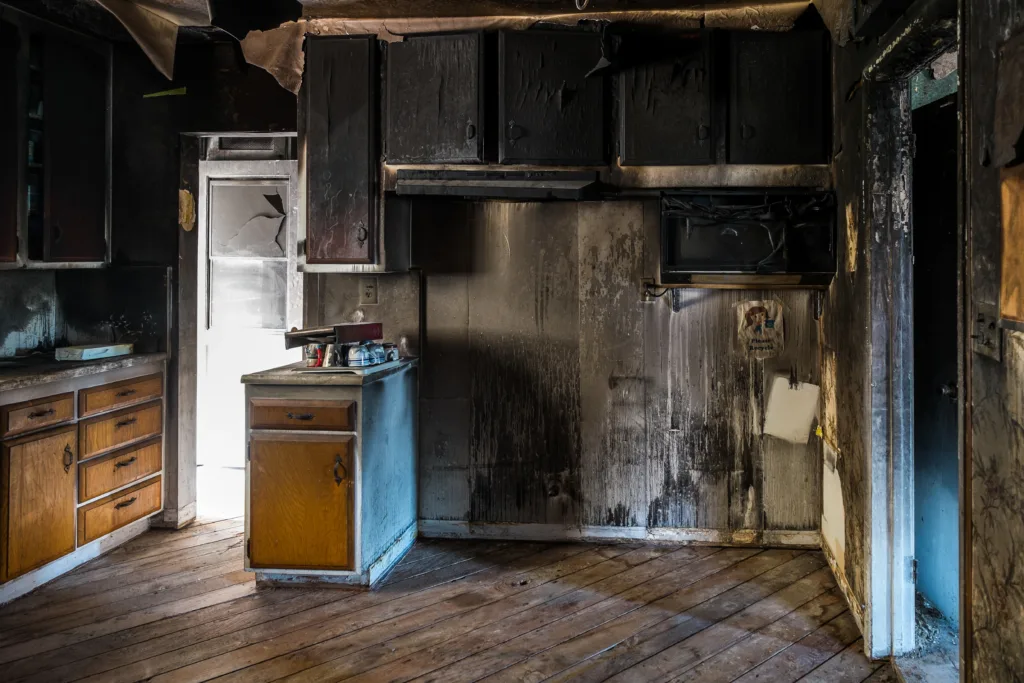
Smoke can spread far beyond the room where a fire occurred. It travels through doorways, gaps around walls and ceilings, ventilation systems and other openings throughout a building. As smoke moves, it leaves soot, oily residue and persistent odors on surfaces and belongings.
In many cases, smoke damage can be removed. The appropriate process depends on what burned, how far the smoke traveled and which materials absorbed the residue. Some surfaces can be cleaned and restored, while heavily contaminated porous materials may need to be removed.
If your property has smoke, soot or fire-related odors, call Jigsaw PMR at (201) 425-4855. We provide professional fire and smoke damage restoration throughout New Jersey, Pennsylvania and Rockland County, New York.
Why Is Smoke Damage Difficult to Clean?
Smoke residue is not always the same. Its composition changes based on the materials involved in the fire and the conditions under which they burned.
A fire involving wood and paper may leave dry, powdery soot. Burning plastic, rubber or synthetic materials can create oily residue that smears when touched. A cooking fire may spread greasy protein-based residue across walls, cabinets and appliances.
The heat of the fire can also affect how deeply smoke enters a material. Hot smoke rises, moves into cooler areas and can penetrate small openings throughout the property.
Smoke damage may affect:
- Walls and ceilings
- Flooring
- Cabinets
- Windows and doors
- Furniture
- Clothing and fabrics
- Electronics
- Appliances
- Insulation
- HVAC components
- Items stored in closets and drawers
Using an unsuitable cleaning product can spread the residue, push it deeper into the surface or cause permanent staining. Professional restoration begins by identifying the type of residue and the materials affected.
Can Smoke Damage Be Removed From Walls?
Smoke damage can often be removed from walls, but the restoration method depends on the wall material and the severity of the contamination.
Painted drywall may be restored when the residue remains primarily on the surface. The wall may require specialized cleaning, deodorization and a sealing primer before it is repainted.
Heavier contamination can penetrate:
- Paint
- Drywall paper
- Joint compound
- Wood paneling
- Wallpaper
- Insulation behind the wall
If the smoke residue has entered porous materials or the wall was also damaged by fire or water, removing and replacing part of the wall may be more appropriate than surface cleaning.
Painting directly over soot is not a complete solution. Residue can interfere with paint adhesion, create stains and allow odors to return. The wall should be evaluated, cleaned and dried before sealing or repainting begins.
Can Smoke Be Removed From Ceilings?
Ceilings frequently collect substantial smoke residue because heated smoke rises. Dark staining may be particularly noticeable around vents, corners, light fixtures and the area above the fire.
The cleaning process depends on the ceiling material. Smooth painted ceilings may be easier to address than acoustic tiles, textured ceilings or unfinished wood.
Porous ceiling tiles often absorb smoke and odors deeply. Some damaged tiles may require replacement. Drywall ceilings may be cleaned, sealed or partially removed based on the extent of the contamination and any water damage caused by firefighting efforts.
Smoke can also enter the space above the ceiling. The visible discoloration may represent only part of the affected area.
Can Smoke Damage Be Removed From Furniture?
Many pieces of furniture can be restored after smoke exposure. The likelihood of successful restoration depends on the material, construction, value and amount of contamination.
Wood Furniture
Finished wood can often be cleaned when the surface is intact. Unfinished wood is more porous and may absorb smoke odors more deeply.
A restoration specialist may need to clean the surface, treat embedded odors and refinish damaged areas. Heat, water and harsh cleaning products can cause additional damage, so the condition of the furniture should be evaluated first.
Upholstered Furniture
Fabric, padding and internal framing can all absorb smoke. Surface cleaning alone may not reach contamination inside cushions or upholstery.
Restoration may involve:
- Removing loose soot
- Cleaning the fabric
- Treating padding and internal materials
- Applying professional deodorization
- Evaluating the furniture after treatment
Furniture with severe contamination, fire damage or contaminated firefighting water may not be safely restorable.
Leather Furniture
Leather requires specialized care because smoke, heat, water and cleaning products can affect its finish. Prompt professional cleaning can improve the chance of restoration.
The item should be inspected before cleaners or conditioners are applied.
Can Smoke Be Removed From Clothing and Fabrics?
Clothing, curtains, linens, rugs and other fabrics can trap smoke particles and odors. Ordinary washing may not completely remove contamination, and placing smoke-damaged items in a household dryer can expose them to heat before the residue has been appropriately treated.
Restorable textiles may require specialized laundering or dry cleaning. The appropriate method depends on:
- The fabric
- Care instructions
- Type of smoke residue
- Severity of the odor
- Water exposure
- Heat damage
Smoke-damaged items should be kept separate from unaffected belongings. Moving contaminated fabrics into a clean room can transfer soot and odors to that area.
When extensive property repairs are required, Jigsaw PMR may use a professional pack-out process to inventory and move belongings for cleaning and secure storage.
Can Smoke Damage Affect Air Ducts?
Smoke can enter an HVAC system through return vents and spread to other parts of the building. Residue may collect inside ductwork, around registers, on equipment and within filters.
Possible signs of HVAC-related smoke contamination include:
- Burned odors when the system runs
- Soot around vents
- Residue inside registers
- Odors appearing in rooms far from the fire
- A contaminated filter
- Smoke exposure near a return vent
The system should be inspected before deciding that duct cleaning is necessary. Smoke odors may also be coming from insulation, walls, ceilings or other materials near the ductwork.
If the HVAC system is contaminated, cleaning only the visible vent covers will not address residue inside the system. Professional air duct cleaning may be included as part of the larger smoke-restoration plan.
Do not operate an HVAC system when doing so could spread soot or smoke residue into unaffected areas. The system should be evaluated before normal use resumes.
Why Does the Smoke Smell Keep Coming Back?
Smoke odor can return when contaminated materials remain inside the property. Odor molecules may be held inside drywall, insulation, wood framing, carpet padding, upholstery and other porous materials.
The smell may become more noticeable when:
- Indoor humidity rises
- The HVAC system runs
- The property warms up
- Windows and doors remain closed
- Contaminated materials are disturbed
- Airflow moves through wall or ceiling cavities
Air fresheners and scented sprays may cover the smell temporarily, but they do not remove the source.
Professional odor removal begins with cleaning or removing the affected materials. Deodorization equipment can then be used based on the type and extent of the remaining odor.
How Is Smoke Odor Professionally Removed?
Smoke-odor removal is normally completed as part of the larger restoration process. Applying deodorization before removing soot and burned materials may produce incomplete results.
The process may include:
- Inspecting the property and tracing the path of the smoke
- Removing burned debris and unsalvageable materials
- Cleaning soot from structural surfaces
- Cleaning or packing out affected belongings
- Treating porous materials that can be restored
- Cleaning HVAC components when necessary
- Applying professional deodorization treatments
- Sealing restored surfaces when appropriate
- Evaluating the property for remaining odors
Hydroxyl generators, ozone equipment and thermal fogging may be used for certain projects. The appropriate treatment depends on the source of the odor, the materials involved and whether the building is occupied.
These treatments require professional planning. Ozone should not be used in occupied spaces at treatment concentrations, and the area must be properly ventilated before reentry.
Does Everything Exposed to Smoke Need to Be Replaced?
No. Many structural materials and belongings may be cleaned and restored.
The decision depends on:
- How close the item was to the fire
- The type of smoke residue
- The amount of soot present
- How deeply odor entered the material
- Heat and water damage
- The cost of restoration compared with replacement
- The item’s practical or sentimental value
Hard, nonporous materials are generally easier to clean than porous materials. However, every item should be evaluated individually.
A professional restoration company can separate salvageable items from those that cannot be safely or economically restored. This evaluation can also help with the insurance claim.
Is Smoke Damage Covered by Homeowners Insurance?
Smoke damage caused by a covered fire is commonly included in homeowners insurance. Coverage may extend to structural cleaning, odor treatment, damaged belongings and necessary repairs.
The insurance carrier may request:
- Photographs of affected rooms
- An inventory of damaged belongings
- Cleaning and restoration estimates
- Records of emergency services
- Information about the source of the fire
- Documentation showing which items can be restored
Coverage varies by policy and circumstances. The insurer makes the final decision regarding the claim.
Avoid disposing of smoke-damaged materials before they have been documented unless they present an immediate safety risk. Jigsaw PMR can document affected areas and communicate with insurance representatives during restoration.
How Long Does Smoke Damage Cleanup Take?
The timeline depends on the size of the affected area and how far the smoke traveled.
A small, contained incident may require several days of cleaning and deodorization. A larger fire involving multiple rooms, HVAC contamination, damaged belongings and reconstruction can take several weeks or longer.
The schedule may be affected by:
- Type of residue
- Number of rooms affected
- Materials requiring cleaning
- Extent of water damage
- Contents requiring pack out
- HVAC contamination
- Odor-treatment requirements
- Repairs and reconstruction
- Insurance approvals
An inspection is necessary before an accurate restoration plan can be developed.
Call Jigsaw PMR for Smoke Damage Cleanup
Smoke damage can remain inside walls, furniture, fabrics and ventilation systems after the visible fire debris has been removed. Treating only the obvious stains may leave soot and odors elsewhere in the property.
Jigsaw PMR provides soot cleaning, smoke damage restoration, odor removal, contents handling, air-duct cleaning and reconstruction for homes and businesses affected by fire.
For 24/7 assistance, call (201) 425-4855 or contact Jigsaw PMR.
About Jigsaw PMR
Jigsaw Property Maintenance & Restoration is a family-owned property restoration company providing 24/7 emergency service throughout New Jersey, Pennsylvania and Rockland County, New York. Our IICRC-certified team handles fire and smoke damage, water and flood damage, mold remediation, odor removal, storm damage and additional restoration services for residential and commercial properties.


